 Image 1 of 1
Fellow Drammers!
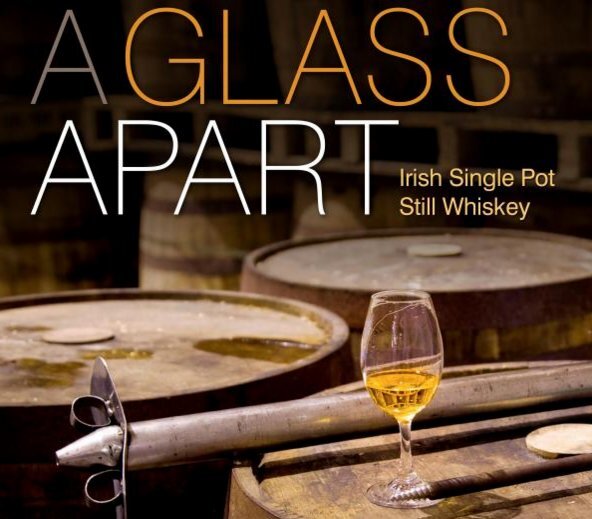
On, Sunday, December 13th at 3pm EST, we’re excited to welcome Fionnan O’Connor, the author of what many people think of as the definitive guide to Irish whiskey, particularly Irish single pot still Irish whiskey: A Glass Apart. Fionnan has kindly agreed to join us from Dublin, where he lives. This is the 3rd book in our Drammers Book Club series, following our wonderful event with Aaron Goldfarb, author of Hacking Whiskey last month, and our upcoming event with David Jennings, author of the definitive Wild Turkey book American Spirit. For this, our 3rd event, members are encouraged to purchase a copy of A Glass Apart on their own in their preferred format (more on this below, but short version — go for the ebook for $9.99 on Google Books, we do NOT recommend the hardcover on Amazon, which has almost unreadably small font). We’ve also put together a fun (optional) tasting set to go along with it, which you can purchase here. The lineup will include at least 5 Irish whiskies:
“Tyrone Collection” Irish Whiskey from 1840-1860. This is one of the most spectacular bottles we’ve ever included in any Drammers event ever. Approximately 200 bottles were found in a hidden basement in Ireland (the “Tyrone collection”), of which 120 survived to be sold at auction, and our members Dan and Sole not only bought a bottle, but have very generously agreed to let our club use it for this event. It is estimated to have been made between 1840 and 1860 (in the era of the potato famine), likely not made by a licensed distiller, so effectively a moonshine, but aged (it has a golden honey color), and the analysis suggests it is the classic 50/50 malted and unsalted mash bill that is so common to Irish whiskey (which came to pass in part because the food shortage led to the banning of wheat and oats in Irish whiskey for obvious reasons). Even better, Dan and Sole corresponded with Fionnan (our guest speaker), who confirmed “this stuff doesn’t taste like new make spirit, it’s been in something”. Fionnan had tried a sample from Ian McMillan, who had been hired to do the sensory testing on it and reckoned it tasted like “seated Irish pot still style” whiskey. Not sure on the abv, but some were tested and found to be over 50%. Talk about a headliner!
Redbreast 21yo. This is an excellent, premium example of Irish single pot still whiskey, and note we are working on doing a stand-alone event with them soon. Today it is made by Irish Distillers, who bought the brand in 1986, but its roots go back much farther to the company W&A Gilbey that was founded in London in 1857. It comes from the era when merchants bought distillate and sold it themselves (more on that in the Green Spot description below), and oddly enough the likely precursor name for this whiskey was John Jameson & Sons Castle "JJ Liqueur" Whiskey 12 Year Old, which was marketed at least as early as 1903 in a bottle of similar shape and markings to those used for subsequent bottlings of Redbreast. The first official reference to “redbreast” for the whiskey came in 1912 (in a document referencing the sale of "Redbreast" J.J. Liqueur Whiskey 12 Year Old). The name apparently comes from the company’s chairman, who was an avid birdwatcher, who gave the whiskey the nickname. Anyway, history aside, 21yo single pot still Irish whiskey is not easy to come across. It’s bottled at 46% abv and was aged in ex-bourbon and first fill Olorosso sherry casks.
Green Spot - Chateau Montelena Finish. Green Spot (like Red Spot and Yellow Spot) is produced specifically for Mitchell & Son of Dublin by Irish Distillers at the Midleton Distillery in Cork, and it is one of the few remaining bonded Irish whiskies. Their roots date back to 1887 when they expanded their bakery business to include wine and spirits. At the time, it was common for Irish merchants to purchase distillate in bulk from whiskey distilleries and then mature it themselves in their own casks in bonded warehouses (today they are one of only 3 Irish whiskies produced by independent wine merchants). Although blue spot, yellow spot and green spot were all historical brands of the company, Green Spot was the most popular and is the only one that has remained in constant production since it was created. The normal Green Spot release is a 7 to 10 year aged whiskey. They have started riffing on this release in recent years with an experimental finishing series called “Wine Geese”, where they take the normal Green Spot and finish it in wine barrels from wineries founded by Irish immigrants. This is I think the 2nd release in the series (the Chateau Leoville Barton was the first in 2015). “Wine Geese” refers to Irish countrymen, passionate about wine, who left their homeland in pursuit of a passion which could only be fully realized elsewhere. In this case, Jim Barrett moved from Waterford, Ireland to Boston and later Napa valley, where in the 1970s he bought and restored the struggling Chateau Montelena, which is known for a particularly spicy grape.
Powers John’s Lane Release. An Irish single pot still tasting wouldn’t be complete without a Powers bottle in the lineup — their Powers Gold Label was historically the best selling whiskey in Ireland and was the first to be sold in a bottle. It was founded in 1791 by James Power and became one of the “big four” of Irish whiskey, ultimately becoming one of the first to embrace the coffey still that was pointedly rejected by most of the Irish whiskey industry and which sadly led to many of them going out of business. This John’s Lane release is named after the street where the distillery was located in the early 1800s, and is said to be a heavier style of pot distilled whiskey aged primarily in ex-bourbon casks with some oloroso sherry butts in the mix. We have yet to try it, but reportedly we can expect an intense array of spices.
Tullamore Dew - an old ~1970s dusty! This is the only one that is not a single pot still — we thought it would be fun to have an classic blended Irish whiskey to contrast with, and while we’re at it, why not a fun old dusty version of it? So we sourced this Tullamore Dew at auction. The tax stamp isn’t dated, but we’re guessing its from the 1970s for now, we’ll see if Fionnan knows more about it. And honestly it just looks cool, coming in a fun porcelain jug. 43% abv.
That’s our lineup! we hope you can join us, and please do buy the book (as noted above, the book is not included, you get that on your own)! It was published on November 19, 2015 and the original printing was 224 pages. Again, since the whiskey won’t go out for a weeks and we want folks to have plenty of time to read the book, you’re encouraged to buy that on your own. And here you have 3 options, but we only recommend 2 of them. First, you can find the e-book for $9.99 on Google Books, that’s a perfectly good way to go. There’s also the hardcover version on Amazon ($25), but we do not recommend it — this is a reprint that has tiny, almost unreadable font and is very hard to read. The original printing of it is the best version (you can still get at Bookdepository.com), though it is a little pricier at $45, and you’ll need to allow some time for it to arrive (note that the ebook is the updated 2nd edition).